Lester van der Merwe
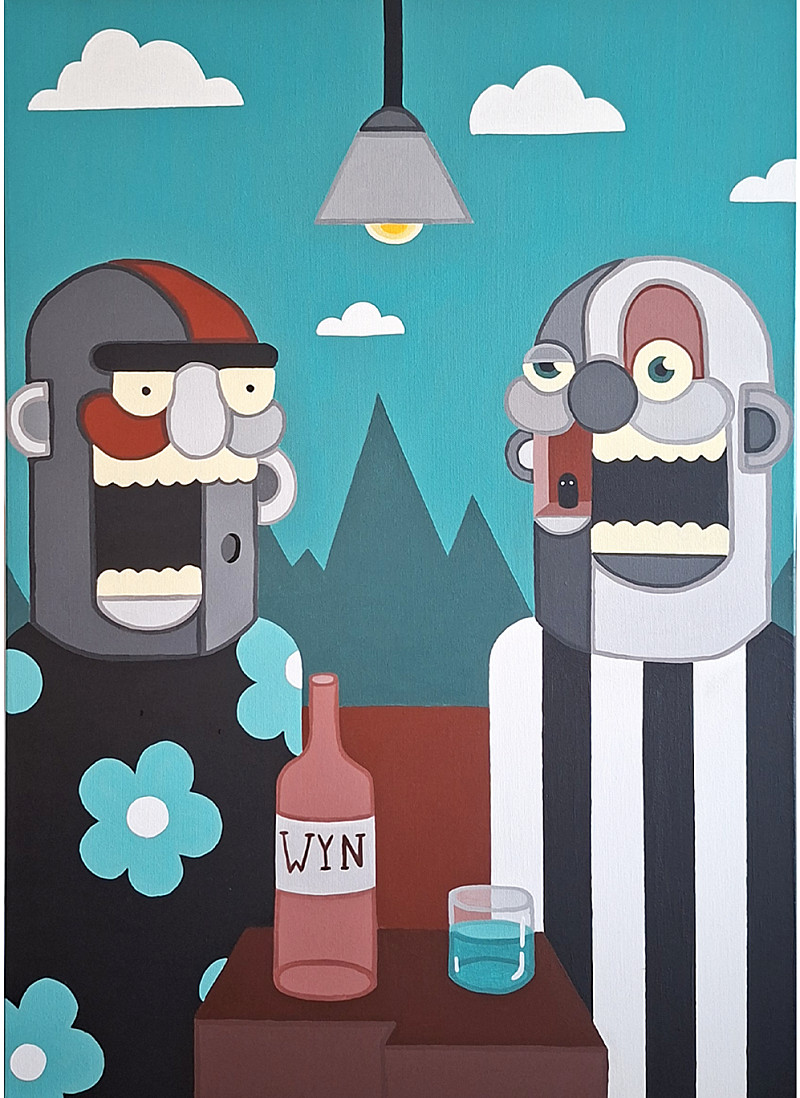
Lester van der Merwe is a contemporary artist whose practice centres on the creation of characters that act as fragmented expressions of the self. Through Cubist abstraction, distortion and carefully constructed compositions, his work explores emotions, thoughts and aspects of identity that are often difficult to communicate through language.
The characters are not representations of fixed individuals, but vessels for different parts of the artist’s internal world. They embody emotions, insecurities, desires, memories and experiences that may otherwise remain unspoken. In this sense, the characters become a visual language, allowing van der Merwe to express parts of himself that he cannot always articulate directly.
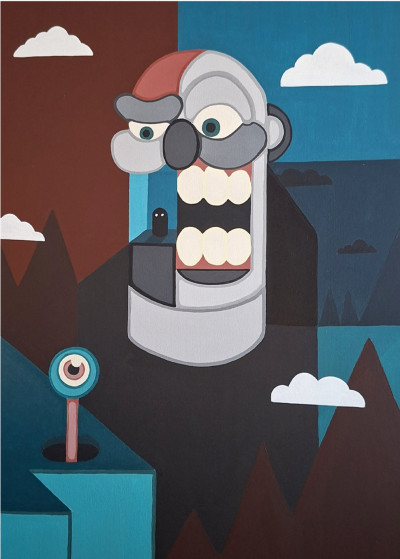
His graphic design background strongly informs the way his paintings are constructed. An understanding of composition, hierarchy, balance, rhythm and negative space influences how each character and fragmented form exists within the frame. This structural approach is combined with the disruption and freedom of Cubist abstraction, creating compositions that move between control and spontaneity, recognition and distortion.
A significant development in van der Merwe’s newer body of work is the changing environment surrounding these established characters. Earlier works often placed the characters alone within dormant, almost lifeless spaces. They existed in isolation, suspended within empty worlds. In the newer work, that world is beginning to grow around them. Forms, landscapes, objects and fragments of environments are gradually emerging, suggesting movement, possibility and the development of an internal landscape.
This evolution reflects a broader shift within the practice: the characters are no longer simply existing within themselves, but beginning to inhabit a world of their own. What was once an empty space is becoming increasingly populated, layered and alive. Through these characters and their expanding environments, van der Merwe explores the fragmented nature of identity and the process of giving form to the internal. His work invites viewers into a world that is personal without being entirely explained, allowing the characters to become both representations of the artist and vessels through which viewers can recognise fragments of themselves.